
Project Everest
Turning the World’s Motion into Endless Energy…
Project Everest represents the next evolution in energy harvesting. Ambient energy converted into power from and for a world that never stops moving.
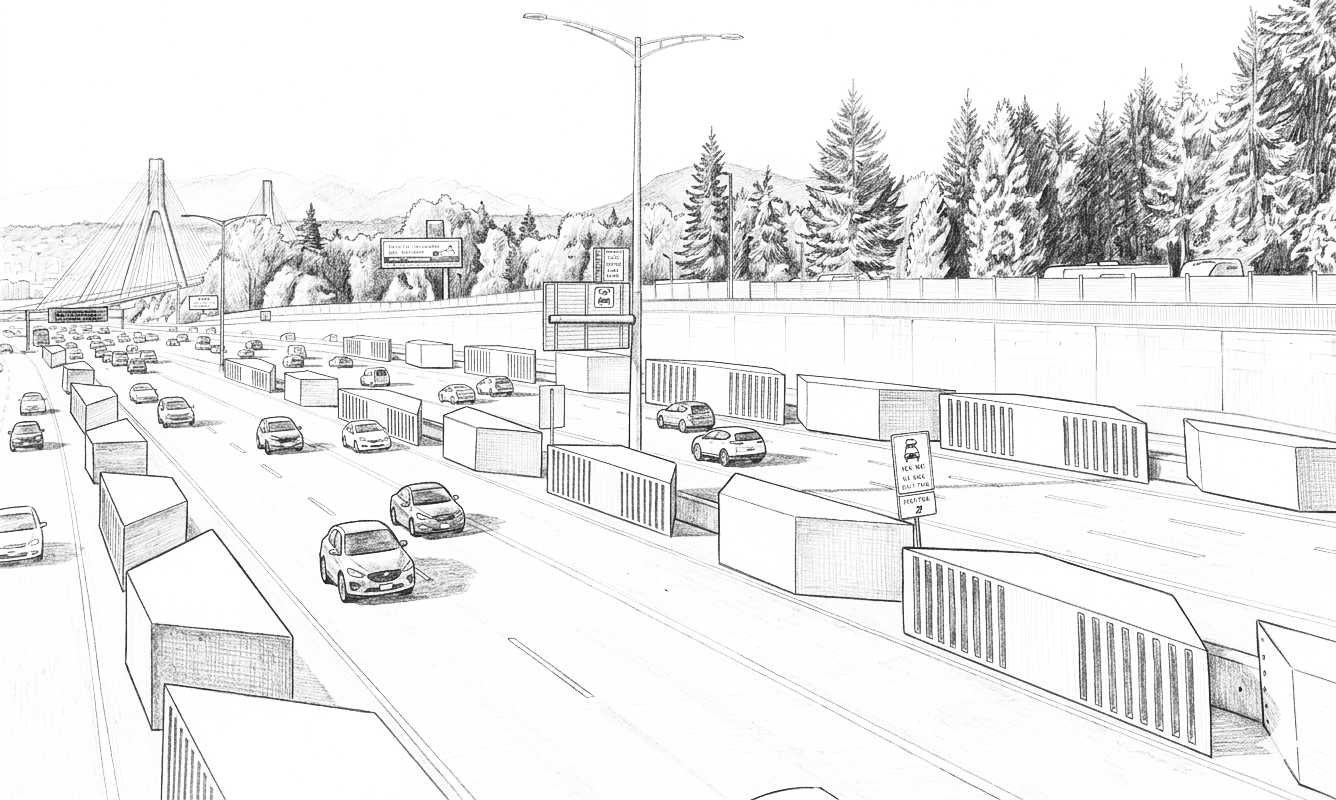
Project Everest is not just an invention; it’s a movement toward a cleaner, self-sustaining future. Conceived and developed by DJ Singh. Project Everest captures the energy that surrounds us in a form of vibrations, sound, wind, and motion and transforms it into usable electric power.
Inspired by the quiet strength of nature itself, this innovation stands as a symbol of limitless potential; where every vibration, every gust of wind, every motion becomes a source of life and light.
A Glimpse into the Future of Energy…
Watch how Project Everest transforms everyday motion into clean, renewable electricity. From the subtle sway of structures to the rush of vehicles on highways, every vibration becomes a source of energy, turning the ordinary into something extraordinary.
This is more than innovation, it’s a revolution in how we understand and capture the forces that surround us.
The Vision – What Is Project Everest?
A New Era of Energy Harvesting
Project Everest is a breakthrough in ambient energy harvesting. An innovative technology that converts the natural vibrations and movements around us into clean electric power.
Unlike traditional renewables that depend on sunlight or strong wind, Everest taps into an ever-present resource – the motion and energy that already exist in our surroundings. Every passing vehicle, every vibration in a structure, every wave of air carries untapped potential. Everest captures and transforms that potential into usable energy.
At its heart, Project Everest combines multiple subsystems designed to work harmoniously:
- Resonating Structures: Engineered to sense and amplify mechanical vibrations caused by environmental forces such as wind, sound, or motion.
- Energy Conversion Modules: Energy conversion modules that transform collected kinetic input into stable electrical output.
- Dynamic Energy Chambers: Modular assemblies that channelize environmental energy toward the conversion system, increasing performance and reliability.
Together, these technologies form a scalable, passive, and low-maintenance system that can be deployed along highways, bridges, factories, and urban landscapes to continuously harvest power from the environment itself.
Global Potential & Impact
💰 $30 billion in economic value
Based on analytical modelling, deploying this technology across just half of North America’s usable roadway network could yield over $ 30 billion in economic value
💰 $300 billion – Immediate Global Opportunity
On a global scale, the potential market for Project Everest is estimated at $ 300 billion. According to internal analysis based on infrastructure availability and real-world deployment models, this figure represents an immediately achievable opportunity.
💰 Long-Term Vision – Expanding Toward $1.9 Trillion
While $300B is a near-term realistic benchmark, broader global adoption, integrating highways, bridges, city infrastructure, and energy-intensive facilities worldwide could eventually scale the market to over $ 1.9 trillion.
🏗️ Industrial & Material Impact
Each kilometre of large-scale deployment could require up to 100 tonnes of structural material, primarily steel and other ferrous alloys, along with complementary non-ferrous components.
At global deployment levels, this could translate into the utilization of hundreds of millions of tonnes of industrial material.
👷♂️ Job Creation & Economic Multiplier
Project Everest’s ecosystem has the potential to create tens of thousands of jobs, directly and indirectly. These roles would span from research, design, and manufacturing to deployment, monitoring, and maintenance, stimulating both skilled and semi-skilled labour markets.
⚡ Energy Potential
Deploying across infrastructure in North America, the system could deliver around 260 ~ 300 TWh of clean energy per year.
At full global scale, output could exceed more than 2,600 ~ 3000 TWh annually, enough to power entire nations from the world’s natural motion.
🌄 The Journey Behind Project Everest
Project Everest is the culmination of over three years of relentless innovation, experimentation, and fine-tuning; A mission born from the simple yet profound idea that the world around us is constantly generating energy, and it is time we learn to capture it efficiently. The system embodies this vision by channeling and synchronizing ambient energy. Vibrations, airflow, acoustic resonance, and dynamic motion into a carefully engineered resonating and conversion system capable of transforming passive surroundings into productive energy sources.
The concept evolved through hundreds of design iterations and physical trials, each one refining the balance between sensitivity and strength, until a satisfactory prototype was achieved. The design’s elegance lies in its modular chamber architecture, allowing seamless integration into highways, bridges, and large infrastructure networks. These units silently harvest the ambient forces produced by vehicular motion, wind turbulence, or structural oscillations, converting them into continuous, usable power.
With patent protection already filed through both Nationally and Internationally, Project Everest stands positioned for global deployment and large-scale commercialization. Its scalable nature allows cities, industries, and governments to retrofit existing infrastructure, creating a new layer of clean, decentralized energy production infrastructure without disrupting existing systems.
The economic potential of this breakthrough is staggering. Conservative assessments place the global opportunity at over $300 billion, representing immediate market applications within transportation and smart-city development. However, with broader global adaptation and integration into dense infrastructure networks, this impact could scale exponentially to exceed $1.9 trillion, shaping one of the largest clean-energy transitions in modern history.
Beyond economics, Project Everest symbolizes a shift in perception that progress does not always need to rely on massive power plants or visible machinery. Sometimes, it can be achieved through subtle innovation that channels the untapped rhythm of the environment itself. It redefines how the world can think about sustainability: not as an addition to life, but as a function of life itself.
“Dream, dream, dream. Dreams transform into thoughts and thoughts result in action.”

Dr. A.P.J Abdul Kalam
Join now for the updates!
Stay in the loop with everything you need to know.